
Rishi Pāṇini (पाणिनि) was one of the greatest scholars of ancient India and is regarded as the Father of Sanskrit Grammar. He lived around the 5th–4th century BCE (though some traditions place him even earlier). His most celebrated work is the Aṣṭādhyāyī, a monumental treatise on Sanskrit grammar.
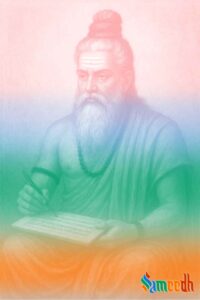
Panini was a Sanskrit grammarian who gave a comprehensive and scientific theory of phonetics, phonology, and morphology. Sanskrit was the classical literary language of the Indian Hindus and Panini is considered the founder of the language and literature.
Life
-
Exact details about Rishi Panini’s life are scarce.
-
He is believed to have been born in Śālātura (modern-day Pakistan, near the Indus region).
-
Panini belonged to the tradition of Vedic scholars who preserved language and knowledge through precise rules.
-
Ancient references, including those by later grammarians like Patanjali, confirm his towering influence.
Major Work – Aṣṭādhyāyī
-
Aṣṭādhyāyī means “Eight Chapters”.
-
It is a scientific system of grammar consisting of about 4,000 sutras (aphorisms).
-
Panini codified the structure of Sanskrit in a way that could generate correct words and sentences.
-
His work is not only linguistic but also mathematical in precision—he used meta-rules and recursive definitions, concepts that modern linguistics and computer science admire today.
Speciality
-
Father of Linguistics – Panini is considered the first descriptive linguist in the world.
-
Influence on Modern Science – His grammar rules are so systematic that some scholars compare them to the logic of computer programming.
-
Preserver of Vedic Knowledge – By standardizing Sanskrit, he ensured the oral and written preservation of Vedic texts.
-
Global Recognition – Modern linguists like Ferdinand de Saussure and Noam Chomsky have acknowledged Panini’s genius indirectly, as his methods prefigure modern linguistic theories.
Legacy
-
Patanjali (2nd century BCE) later wrote the Mahābhāṣya, a detailed commentary on Panini’s work.
-
Panini’s system became the foundation for Vyākaraṇa (Sanskrit grammar), one of the six Vedāṅgas (auxiliary sciences of the Vedas).
-
He is still remembered as one of the greatest intellectuals of ancient India.
In short:
Rishi Panini was not only a sage but also a pioneering linguist, philosopher, and grammarian, whose work shaped Sanskrit and influenced the study of language across the world.




One Response
What a breath of fresh (Sanskrit) air! Who knew dissecting language could be so revolutionary? Panini is basically the original codebreaker, turning Sanskrit into something more structured than my morning coffee. Calling him the Father of Linguistics is like saying Google was the first person to think of looking things up – foundational, sure, but maybe a bit generous! And comparing his sutras to computer programming? Honestly, if my Excel spreadsheets worked half as seamlessly, I’d be a happy camper. Though, perhaps Panini could have helped me with the Vyākaraṇa part of managing my to-do list. A truly towering figure, even if his methods seem almost *too* perfect for the world of chaotic modern life!Nano Banana free