
Jaimini Rishi is one of the most outstanding scholars and saints of Hindu philosophy. Maharishi Jaimini introduced the tradition of Purva-Mimamsa – a tradition of critically examining the pre-Vedic texts. Therefore, saint Jaimini founded the Mimamsa school of Hindu Philosophy to keep this tradition alive.
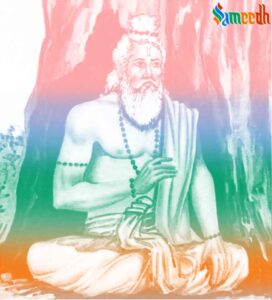
Life and Background
-
Identity: Rishi Jaimini was an eminent Vedic sage, best known as the chief disciple of Rishi Vyas (Krushna Dvaipayana Vyas), the compiler of the Vedas and author of the Mahabharat.
-
Birth: He is believed to have been born in the Dwapar Yug, around the same time as the Mahabharat events.
-
Lineage: Although details of his parentage are scarce, tradition holds that he was raised under Guru Vyas’s tutelage, mastering the Vedas, Vedangas, and multiple shastras.
-
Role: He is remembered as a great philosopher, grammarian, and founder of the Purva Mimamsa school of Hindu philosophy.
History and Contributions
-
Founder of Purva Mimamsa
-
Jaimini established the Mimamsa Darshana, one of the six classical schools (Shad-Darshanas) of Hindu philosophy.
-
His system focused on the correct performance of Vedic rituals (karma-kanda) and their role in attaining dharma (righteousness).
-
-
Works
-
Jaimini Sutras (Mimamsa Sutras): A foundational text of Purva Mimamsa, consisting of 12 chapters and 2,700 sutras.
-
Jaimini Bharata: A retelling of parts of the Mahabharata, particularly focusing on the Ashvamedha Parva, narrated from a different perspective.
-
Contributions to Jyotisha (astrology): Some texts attribute a Jaimini System of Astrology to him, known for its unique predictive methods.
-
-
Disciple of Vyas
-
Vyas is said to have entrusted Jaimini with preserving and teaching the Sam Ved tradition.
-
Teachings
Rishi Jaimini’s philosophical focus was:
-
Primacy of Karm (Ritual Action)
-
Dharm is realized by performing Vedic duties correctly, not merely through renunciation or devotion.
-
-
Vedas as Eternal Authority
-
Vedas are apaurusheya (not of human origin) and infallible.
-
-
Rituals for Cosmic Harmony
-
Proper sacrifices maintain the cosmic order (Rta), benefiting both the performer and the world.
-
-
Focus on Earthly and Spiritual Gains
-
By karma, one attains both material prosperity and, ultimately, liberation (moksh).
-
Later Life
-
Continued teaching disciples in Sama Veda, Mimamsa philosophy, and ritual sciences.
-
Travelled to spread Vedic knowledge and preserve ritual traditions.
-
Remained a staunch defender of Vedic authority and ritual practice.
Legacy
-
Revered as the Acharya of Purva Mimamsa among the Shad-Darshanas (six orthodox schools).
-
His ritualistic emphasis still influences Vedic priesthood and ceremonial traditions today.
-
His sutras continue to be studied by philosophers, priests, and scholars of dharma.