In Hinduism, a mandala is a sacred geometric design that holds spiritual significance and is often used as a tool for meditation, ritual, and spiritual practice. Mandalas can take various forms, including intricate geometric patterns, circular designs, or symbolic representations of deities. The word “mandala” is derived from the ancient Indian language of Sanskrit, meaning “circle” or “disc.”
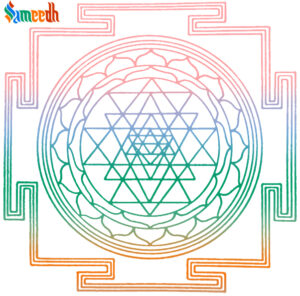
A Mandala (Sanskrit for “circle”) is an artistic representation of higher thought and deeper meaning given as a geometric symbol used in spiritual, emotional, or psychological work to focus one’s attention. Here are some aspects of mandalas in Hinduism:
- Symbolism and Representation:
- Mandalas often represent the cosmos, with their intricate patterns mirroring the order and harmony of the universe.
- Different elements within a mandala can symbolize various aspects of spiritual or divine reality, such as the journey toward self-realization and unity with the divine.
- Religious Rituals:
- Mandalas are used in religious rituals and ceremonies, especially in Tantric traditions. Tantric practitioners use mandalas as a focal point for meditation, visualization, and ritual worship.
- The construction and consecration of a mandala can be part of a sacred ceremony, emphasizing the idea of creating a microcosmic representation of the divine.
- Yantras:
- Yantras are specific types of mandalas that incorporate geometric symbols and often represent a particular deity. Yantras are used for meditation and worship in various Hindu traditions, especially in Tantra.
- The use of yantras is believed to help focus the mind, energize the spiritual aspirant, and invoke the presence of the deity.
- Temple Architecture:
- Mandalas influence Hindu temple architecture, where the design of the temple and the layout of its various parts often follow a mandala pattern. This is particularly evident in the floor plans of temples.
- Temples may be constructed based on specific mandala designs to align the physical structure with cosmic and spiritual principles.
- Meditation and Spiritual Growth:
- Mandalas serve as aids to meditation, helping individuals concentrate and reach higher states of consciousness. The intricate patterns are believed to assist in transcending the ordinary and connecting with the divine.
- Mandalas can also be used as tools for personal reflection and self-discovery.
- Chakras:
- In certain spiritual traditions, mandalas are associated with the concept of chakras—energy centers within the body. Each chakra is represented by a specific mandala, and the practice of focusing on these mandalas is believed to balance and activate the corresponding energy centers.
Mandalas, whether used in meditation, ritual worship, or as architectural elements, play a significant role in Hindu spirituality. They embody the interconnectedness of the individual with the cosmos and serve as powerful symbols for spiritual awakening and transformation.