Rishi Atri is one of the most illustrious sages in ancient Indian history and is counted among the Saptarishis—the seven great seers of Vedic times. He was a mind-born son of Lord Brahma, the creator of the universe, and a powerful rishi who contributed greatly to Vedic literature, spiritual knowledge, and dharmic values. Rishi Atri’s life reflects the ideals of wisdom, humility, and divine devotion. He and his wife Ansuya raised Brahma, Vishnu, and Mahesh as children.
‘Sapta’ means seven, and ‘Rishi’ means a sage or seer in Sanskrit hence, Saptarishi literally means ‘seven seers’. Saptarishi are the Brahmarishi or scholars who wrote the scientific Indian scriptures such as Ved, Puran, and Upanishad. They created and updated them from time to time. The legends say, Brahma created a series of scholars as ‘Manas Putra’ to impart wisdom and education to human beings.
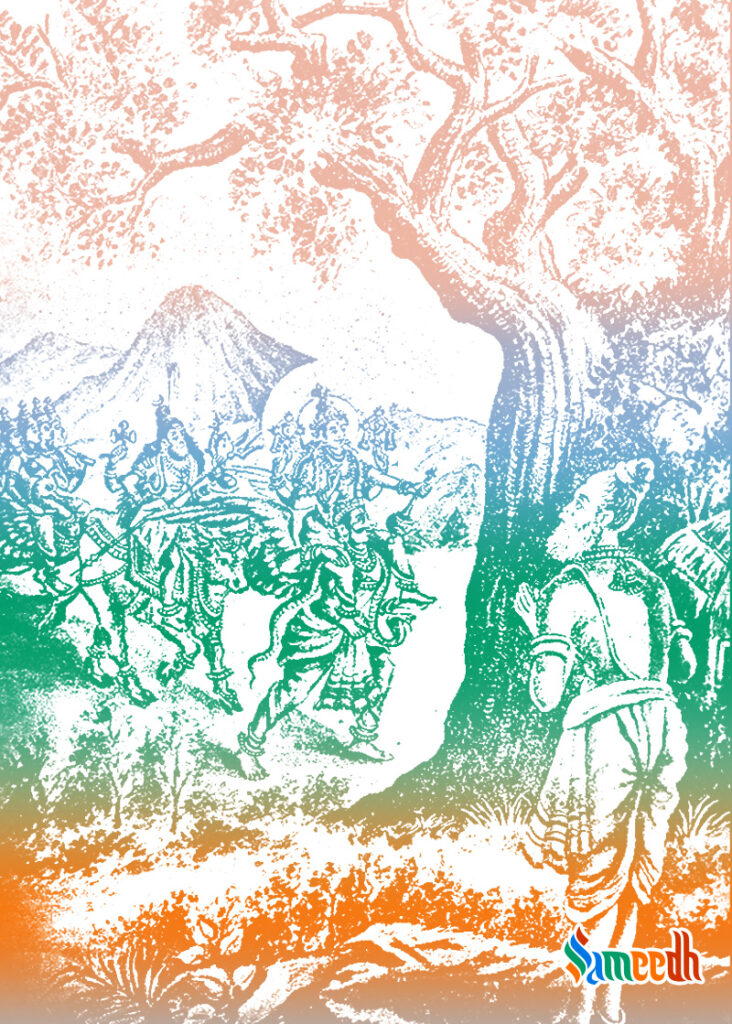
Mahavishnu and the Brahma Rudras appear in front of Saint Atri; Image Source: Tamil and Vedas
Rishi Atri:
Rishi Atri was also one of the mind-born sons of Brahma – a manas putra; and one of the noted Saptarishi. He has been mentioned across all the ages of ancient Indian scriptures – be it Rugved, Puran, Ramayan, and Mahabharat.
Rishi Atri is credited as the author of numerous hymns in the Rigved, particularly in Mandala 5, known as the Atri Mandala. His hymns focus on cosmic order (ṛta), divine grace, light, and truth. He praised gods like Agni, Indra, and Soma, seeking their blessings for peace, prosperity, and spiritual upliftment. Through his spiritual vision (divya drishti), he revealed profound truths about the nature of existence and the power of devotion.
He was married to the daughter of Rishi Kardam and Devhuti – Ansuya. The story of Rishi Atri and his wife Ansuya is considered to be a perfect example of married life.
Rishi Atri, is renowned for his deep penance (tapasya), wisdom, and devotion. He and his wife Devi Anusuya are considered among the most virtuous and spiritually powerful couples in Hindu mythology. A famous legend from the Puranas tells how the Trimurti—Brahma (the creator), Vishnu (the preserver), and Shiv (the destroyer)—were so impressed by the purity and devotion of Anusuya and the intense penance of Rishi Atri that they manifested as their sons.
In this symbolic story, the three gods took birth in three different forms through the couple:
-
Dattatreya – An incarnation of Vishnu. The name Dattatrey indicates him as the son of Atri – an atreya! Dattatrey was the one who once calmed down Parshuram from his never-ending anger.
-
Durvasa – An incarnation of Shiv. Bhagwan Shiv was never born, so he never had a childhood. Maa Parvati once desired to see him as a child. Then Bhagwan Shiv agreed to be reborn.
-
Chandra (Moon God) – Sometimes considered a partial manifestation of Brahma
- They also had a daughter named Brahmavadini.
Thus, Rishi Atri and Mata Anusuya are referred to as the spiritual parents of the Trimurti in symbolic or incarnated forms, not in a literal biological sense.
Rishi Atri is considered to be the author of the fifth Mandal of Rugved called Atri Mandal – a set of interesting Vedic hymns about fire technology, medicine, and astronomy. He is also believed to be the pioneer of the Yagnopavit tradition amongst the Brahmin community.
The legends say that Mata Sita – during the 14 years of exile – visited the ashram of Rishi Atri; and Ansuya guided her about the possibilities and her duties.
The legends of the Chandravanshi kings of India originates from the clan of Chandra who was the son of Rishi Atri. They were Pururava, Yayati, Yadu, and subsequent Yadav clan. He is also said to be the author of Atri Samhita, Atri Smriti, Anustuph Chhand, and the Aagam texts in the Vaishnav tradition.
The same way, the clan of Rishi Kashyap gave rise to the Suryavanshi kings.
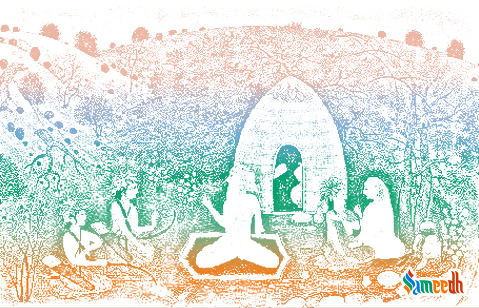
Ram, Sita and Lashman at the Hermitage of Sage Atri.
Rishi Atri has been mentioned in the stories of the war of Mahabharat. When the leader of the Kaurav army – Guru Dronacharya was still fighting ferociously despite knowing that they have lost the war. Rishi Atri, along with other scholars, visited him and convinced him to switch to the path of Dharm.
This way, he saved a lot of lives from the endless warfare of Drona, who was the biggest warrior of all times.
Atri and Ansuya are also mentioned in the story of Shiv Puran about river Ganga’s descend on the Indian plateau. Rishi Atri then sets up his ashram and expands humanity from there.
Today, the Atri gotra is believed to be the family lineage of multiple communities – including deities, kings, rishis, brahmins, Prajapati, and Vaishya casts.