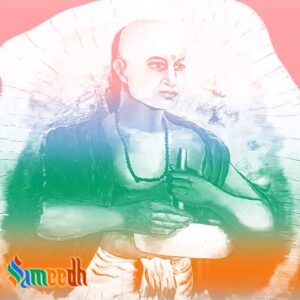
Acharya Charak was one of the most renowned physicians and scholars of ancient India, often called the Father of Indian Medicine. He lived around the 1st–2nd century CE and is credited with systematizing and expanding Ayurved—India’s traditional system of medicine—into a comprehensive discipline.
Life and Background
-
Born in ancient Gandhara (in present-day Pakistan/Afghanistan region) or possibly in Kashmir, though exact details are debated.
-
Believed to have been a court physician to King Kanishka of the Kushan dynasty.
-
His name Charak means “wanderer,” reflecting that he traveled extensively to gather and share medical knowledge.
Legends About Charak
-
The Wandering Healer
-
The name “Charak” (from char, meaning “to move”) comes from his habit of traveling from village to village to treat patients and teach.
-
It is said he believed no patient should be denied help because of distance or social status.
-
-
Healing the King
-
While serving King Kanishka, Charak supposedly cured a chronic illness the royal physicians couldn’t treat.
-
Instead of demanding rewards, he requested support for building hospitals and herb gardens.
-
-
The Test of a True Physician
-
A famous anecdote says that when asked, “Who is the best physician?”, Charak replied:
“The one who treats the root cause, not the symptom, and whose medicine cures without causing harm.”
-
Why Charaka is called father of Ayueved?
Acharya Charak is called the “Father of Ayurved” mainly because he transformed Ayurveda from scattered knowledge into a systematic, scientific, and comprehensive medical discipline.
Here’s why he earned that title:
1. He Compiled and Systematized Ayurvedic Knowledge
-
Ayurveda existed long before Charak — in the Vedic period and through sages like Rishi Atreya and Rishi Chyavan.
-
But it was scattered in oral tradition and manuscripts.
-
Charak revised and expanded the Agnivesha Tantra into the Charaka Samhita, creating a structured medical encyclopedia.
2. Scientific and Rational Approach
-
Moved medicine away from purely ritualistic healing to observation-based diagnosis and treatment.
-
Emphasized understanding the root cause (nidana) of disease, not just treating symptoms.
-
Introduced detailed methods for examination of patients, including:
-
Pulse, voice, eyes, tongue, skin, and body build
-
Mental and emotional state
-
3. Holistic Concept of Health
-
Defined health as a balance of body, mind, and soul, not just absence of disease.
-
Introduced the theory of Tridosha (Vata, Pitta, Kapha) and how their balance is key to wellness.
4. Ethical Guidelines for Physicians
-
Stressed compassion, truthfulness, and service over greed.
-
Prescribed a physician’s oath — centuries before the Hippocratic Oath in Greece.
-
Advocated prevention through proper diet, lifestyle, and seasonal routines.
5. Enormous Influence
-
The Charaka Samhita became the foundation of Ayurved’s branch of internal medicine (Kayachikitsa).
-
His work influenced medical practices in India, Tibet, China, and later Arab and European medicine.
Charak is called the Father of Ayurved because he preserved ancient knowledge, added new insights, and gave Ayurveda its scientific, ethical, and holistic framework — making it a complete system of medicine that survives till today.
Major Contributions
-
Charaka Samhita
-
His most famous work, a monumental Sanskrit text on Ayurveda.
-
Covers a wide range of topics—internal medicine (Kayachikitsa), diagnosis, prevention, pharmacology, and medical ethics.
-
Organized into 8 sections (Sthanas) and 120 chapters.
-
Stresses prevention over cure: “A person who practices healthy living will rarely fall sick.”
-
-
Holistic Approach
-
Emphasized the balance of three doshas (Vata, Pitta, Kapha) for health.
-
Linked physical health with mental and spiritual well-being.
-
-
Ethics of Medicine
-
Advocated compassion, truthfulness, and service-oriented attitude for physicians.
-
Warned against treating patients for greed or personal gain.
-
-
Pioneering Observations
-
Understood concepts similar to immunity, digestion, metabolism, and the mind-body connection.
-
Classified over 500 medicinal plants and described their therapeutic uses.
-
Lineage and Connection to Rishi Chyavan
-
In Ayurved’s guru–shishya tradition, Charak is said to belong to the Atreya School of Medicine.
-
Rishi Atrey was a legendary sage-physician, and Rishi Chyavan was one of his descendants (and also a great Ayurvedic master).
-
Rishi Chyavan is famous for creating the Chyawanprash formulation to restore his own youth and vitality.
-
The medicinal knowledge from sages like Chyavan, Atreya, and Agnivesha eventually reached Charak, who refined and compiled it into the Charaka Samhita.
-
In fact, Charaka Samhita is considered a revised version of the Agnivesha Tantra, originally written by Atreya’s disciple Agnivesha.
-
Acharya Charak is called the Father of Ayurveda because he compiled and expanded ancient medical knowledge into the Charaka Samhita, a systematic text on internal medicine. He shifted Ayurveda toward a scientific, observation-based approach, emphasized prevention and the balance of body–mind–spirit, and laid down ethical guidelines for physicians. His work gave Ayurveda its complete and lasting framework.