Rishi Vashishth has described Kshipra River as ‘Mokshdayini’, meaning, the one who grants salvation. Indian culture is greatly associated with the concept of divinity with these rivers. Kshipra River is not only revered by the Hindus, but also by the Buddhists and Jains.
Kshipra river emerges in the northern part of the Dhar district, travels north across the Malwa Plateau, and merges with the Chambal River in the Mandsaur district in Madhya Pradesh. Hindus regard Kshipra River as holy as the Ganga. Kshipra River merges with rivers like Parwati, Kalisindh, Gambhir and Khan.
HISTORY AND ORIGIN
According to stories found in ancient Indian scriptures, Bhagwan Shiv watched how the humans suffered as a result of their ignorance. However, the world’s creator, Brahmaji, was unconcerned about the misery that living creatures endured. Brahmaji developed a fifth head for himself so that he could see his creation since he was so incredibly delighted of it. As punishment for Brahmaji’s arrogance regarding His creation, a furious Bhagwan Shiv donned the avatar of Bhairav and severed his fifth head. Bhagwan Shiv felt guilty about it immediately. Thus, Brahmaji asked Him to become a Bhikshatana and beg for food in the skull in order to repent for his sin. He won’t be forgiven unless Bhagwan Vishnu offers him guidance on how to atone for his transgression.
When Bhagwan Shiv reached Vaikunth dham to seek Bhagwan Vishnu’s forgiveness, Bhagwan Vishnu pointed His fingers towards Bhagwan Shiv which angered Bhagwan Shiv and He threw His trishul towards Bhagwan Vishnu, which severed His fingers and blood oozed out from His palm. The blood fell into the skull and soon it overflowed from the skull. It is said that the overflowing blood of Bhagwan Vishnu fell on the earth thereby creating the river Kshipra.
SIGNIFICANCE
Hence, Kshipra River is considered as one of India’s holy rivers. Not only does ancient Hindu literature reference it, but even Buddhist and Jain texts also mention its greatness. Oil lamps are offered to the river every evening at the ‘Kshipra Aarti’. People float Dona bowls made of leaves and flowers with a tiny lamp, in the river. It is thought that the Kshipra flowing to the north delivers these offerings to Bhagwan Shiv, in the Himalayas.
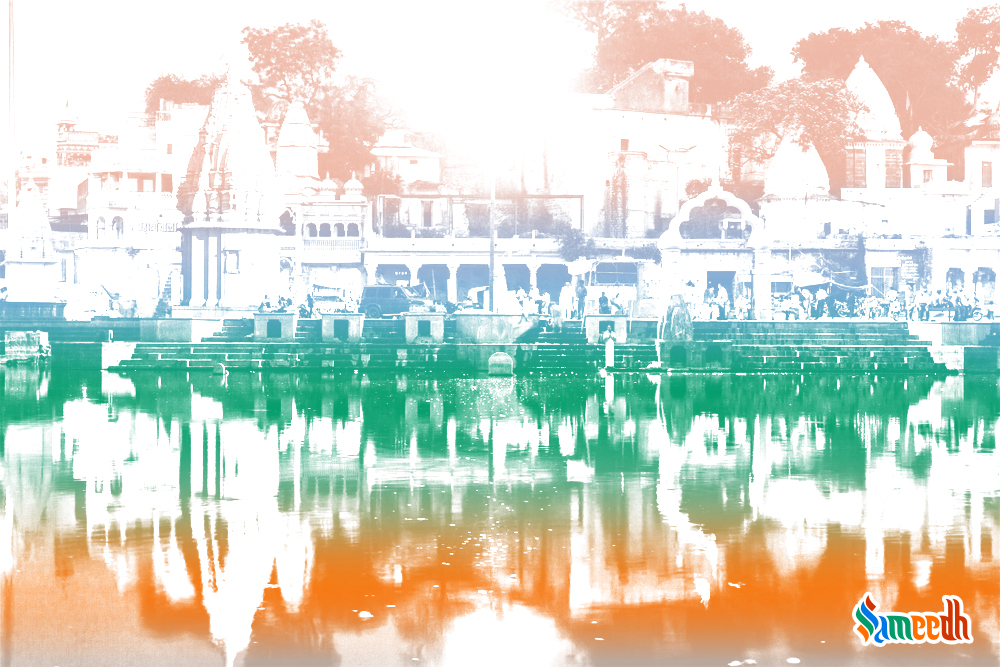
The holy city of Ujjain is situated on the banks of river Kshipra, where every once in every 12 years, the well-known Kumbh Mela festival is held. People take a holy dip in the waters of Kshipra River, with a belief that it will wash away their sins and liberate them from the cycle of birth and death. ‘Ram Ghat’ located on the river bank, is the oldest and the busiest Ghat of Ujjain. The history of the Kshipra River and the city of Ujjain both greatly rely on the Ram Ghat.
As per the age old Indian tradition, the great Sages along with the people of Ancient era worshipped and revered the rivers. Be it the Ganga, Yamuna or the Narmada, Indian culture is greatly associated with the concept of divinity with these rivers. The Hindu populace still practises religious worship of these rivers, preserving the culture. Since the holy river Kshipra is also referred to as ‘Lok Sarita’ or the river of the masses. All human emotions, including Happiness, sadness, hopes, and ambitions of the people are believed to be dissolved in the water of the Kshipra River.
Rishi Vashishth has described Kshipra River as ‘Mokshdayini’, meaning, the one who grants salvation. Several Puranas, including the Bhagwat Puran, Shiv Puran, Vaman Puran, Brahma Puran and Ling Puran, have also glorified the Kshipra River.